Legal UI UX design agency built for trust and authority
We’re a legal UX design agency creating intuitive digital experiences for law firms, legal tech companies, and professional legal teams. We simplify complex workflows, improve usability, and build trust into every interaction.

What is legal UI UX design?
Start a project
Legal UI UX design is the process of creating digital experiences for law firms, legal tech platforms, and professional legal teams. It focuses on making complex information, workflows, and interactions easier to understand while maintaining the trust, clarity, and professionalism expected in the legal industry.
From law firm websites and case management systems to client portals and legal SaaS products, every interaction needs to feel clear, secure, and intuitive. Good legal UX helps users navigate complex tasks, find important information faster, and complete their work with confidence.
At Convex, we combine UX strategy, information architecture, and interface design to create legal products that are easier to use, more credible, and built around the needs of their users.
Authority starts with the experience
A professional digital experience shapes how clients and legal professionals perceive your firm or product before they ever engage with it.
Complex workflows need clarity
Legal products often involve documents, cases, deadlines, and detailed information. Good UX makes these workflows easier to understand and navigate.
Trust shapes every interaction
From client intake to document sharing, every interaction should feel secure, predictable, and professional, especially when sensitive information is involved.
Legal products we design
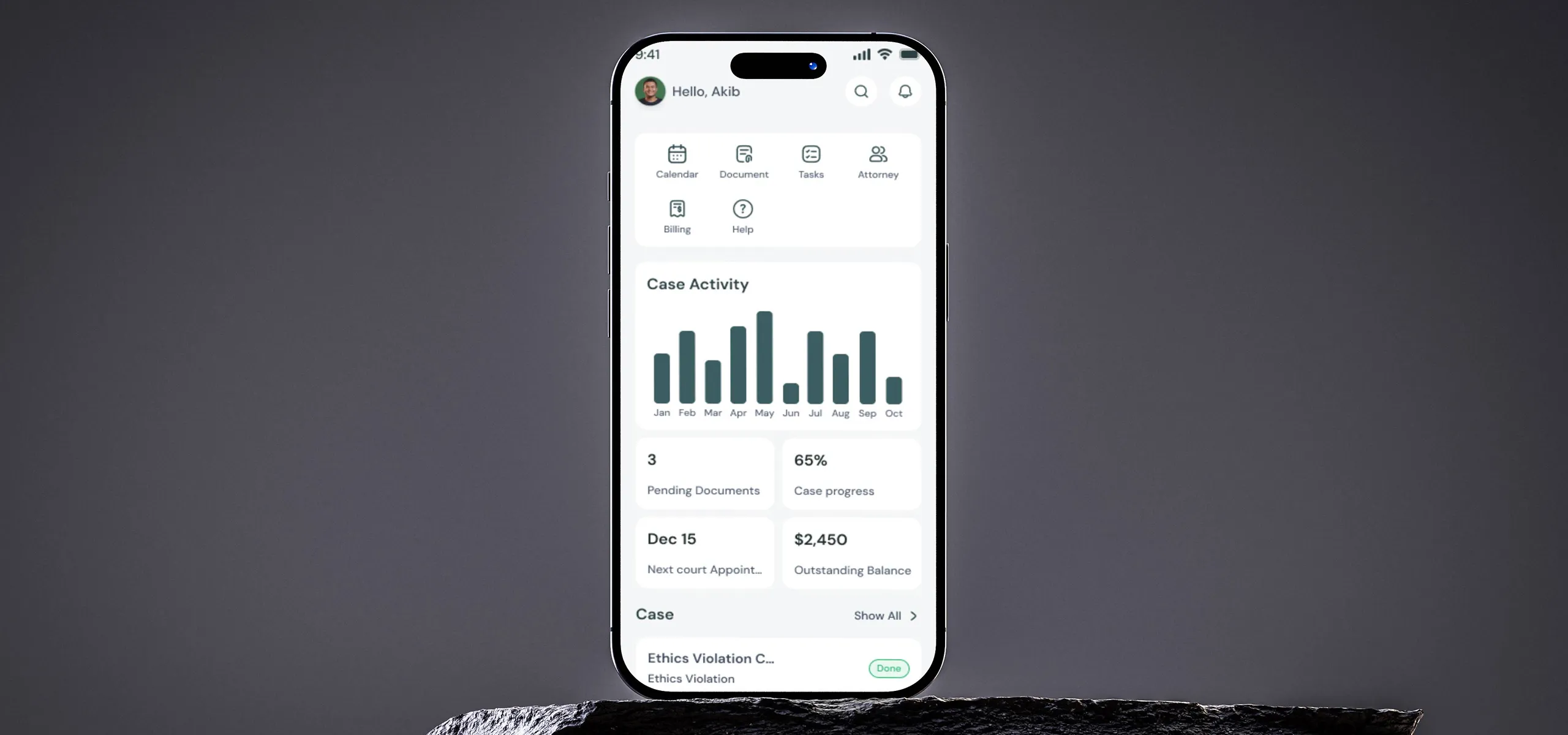
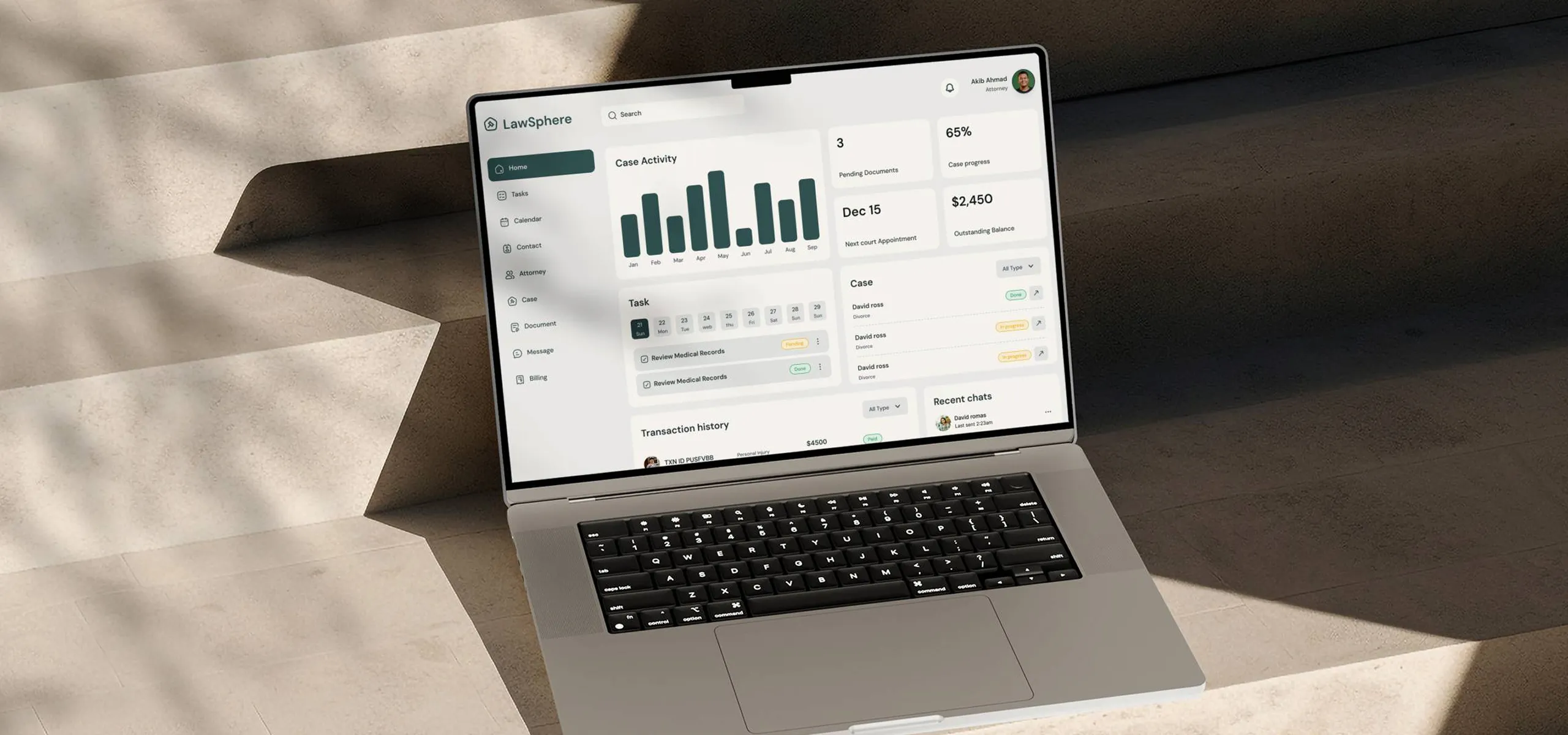
From law firm websites to legal tech platforms, we design digital products that simplify complex legal workflows, improve usability, and create more trustworthy experiences for clients and professionals.
What you get
Every legal UX project at Convex includes the strategy, UX, UI design, and handoff deliverables needed to create a clear, trustworthy, and scalable digital experience.
Start a project
Legal user research & personas
Understand the needs, behaviors, and workflows of clients, lawyers, administrators, and other legal users.
User flows & information architecture
Structure complex legal journeys so users can find information, navigate workflows, and complete tasks with less friction.
Wireframes & low-fidelity designs
Validate structure, hierarchy, and core interactions before moving into visual design.
High-fidelity UI design
Polished, responsive interfaces designed to communicate professionalism, clarity, and trust across every screen.
Legal workflow UX
Design complex legal workflows that make cases, documents, approvals, and tasks easier to navigate and manage.
Trust & authority UX
Design interactions and interfaces that communicate credibility, professionalism, and confidence throughout the user journey.
Client intake & portal design
Create secure, user-friendly experiences for onboarding, communication, document sharing, and client access.
Scalable design system
Build reusable components, patterns, and guidelines that keep your legal product consistent and easy to scale.
Interactive prototype
Explore and validate key workflows with a realistic, clickable prototype before development.

Our legal UX design process
A structured, research-driven process built around the complexity, workflows, and trust requirements of the legal industry. From discovery to handoff, every step is designed to create clearer and more usable legal experiences.
Book a call
Step 01
Discovery & legal context
Understand your business, users, workflows, and the legal context behind the product so we can design around real needs.
Step 02
User research & personas
Learn how lawyers, clients, administrators, and other users work, what they need, and where they experience friction.
Step 03
Information architecture & user flows
Structure complex information and map key journeys so users can navigate legal products and complete tasks more efficiently.
Step 04
Wireframes & experience validation
Explore layouts and interactions early to validate usability, hierarchy, and workflow clarity before visual design.
Step 05
UI design & design system
Turn the validated UX into polished, scalable interfaces that communicate clarity, professionalism, and trust.
Step 06
Prototype, testing & handoff
Validate key interactions with realistic prototypes, refine the experience, and deliver developer-ready files for implementation.
Legal products need more than good design
When your product handles sensitive information, complex workflows, and high-stakes decisions, the experience needs to be designed with legal users, context, and trust in mind.
Start a project
Poor design can cost client trust
A confusing or outdated website or product can make your firm feel less credible before a client ever contacts you.
Complex legal information should feel simple
Clear structure and easy navigation help clients and legal professionals quickly find and understand the information they need.
Complicated workflows slow teams down
Better-designed experiences make cases, documents, approvals, and everyday tasks easier to manage.
Sensitive interactions require confidence
Client portals, intake forms, and document sharing should feel secure, professional, and easy to use.
This is for you if...
Whether you’re launching a legal tech product, redesigning a law firm website, or improving an existing legal workflow, Convex helps you create digital experiences that feel clear, credible, and easy to use.
Start a project
You are a law firm that wants to attract more clients online
We design legal websites that reflect the professionalism of your firm.
You are building a legal tech product from scratch
Design your legal tech product with trust, clarity, and usability built in.
Your existing legal website feels outdated
Modernize your legal website while maintaining trust and professionalism.
Your legal tech platform has low user adoption
Simplify legal workflows with UX designed to reduce friction and confusion.
You need a client portal or intake system
Secure client portals designed for simple communication and document sharing.
You are a corporate legal department going digital
We design legal workflows that improve efficiency and clarity for teams.
You are a legal tech startup preparing for funding
Polished legal tech design builds trust with investors and legal teams.
You want your legal brand to stand out in a competitive market
Stand out with a legal brand that feels more professional and trustworthy.
Simple,
Transparent pricing
One focused package covering research, UX strategy, UI design, prototyping, and developer-ready handoff for complex legal experiences.
Legal design
Starting from
$2,200
A complete design engagement for law firms and legal tech teams that need to turn complex information and workflows into clear, intuitive, and trustworthy digital experiences.
Start your legal project
Delivered in 4-6 weeks
Legal user research & personas
User flows & information architecture
Wireframes & low-fidelity designs
High-fidelity UI design
Legal workflow UX
Trust & authority UX
Client intake & portal design
Scalable design system
Interactive prototype
Figma source files
Developer handoff documentation
Unlimited revisions within scope
Post-handoff support
Frequently asked questions
Answers to common questions about legal UI/UX design, project scope, process, pricing, and what it’s like to work with Convex.
How will a professionally designed law firm website help me attract more clients?
A professionally designed law firm website improves client acquisition in several important ways. It creates a strong first impression that immediately shapes how credible and trustworthy the firm appears. It communicates expertise clearly by helping potential clients quickly understand the services you offer and why your firm is the right fit for their situation. And it builds the confidence people need before reaching out about sensitive legal matters.
How will great design improve user adoption of our legal tech platform?
Legal tech adoption is challenging because legal professionals have very little tolerance for tools that slow down their work or add unnecessary complexity. Even powerful platforms fail when the experience feels difficult to learn or inefficient to use. Great legal tech design improves adoption by making workflows faster, information easier to access, and everyday tasks more intuitive within the way lawyers already work.
What types of legal products do you design?
We design digital experiences for law firms, legal tech companies, and corporate legal teams, including law firm websites, legal SaaS products, case management systems, contract platforms, client portals, and intake systems.
Can you redesign an existing legal website or product?
Yes. We can redesign outdated or difficult-to-use legal experiences while preserving what already works. We focus on improving navigation, clarity, usability, visual credibility, and key user journeys.
Can you design complex legal workflows?
Yes. We design workflows for cases, documents, approvals, tasks, intake, and other legal processes. The goal is to make complex work easier to understand and manage without removing important functionality.
Do you design client portals and intake systems?
Yes. We design secure, user-friendly experiences for client onboarding, information collection, document sharing, communication, and ongoing access to important information.
What does a legal UI/UX design project include?
Projects can include user research, personas, information architecture, user flows, wireframes, high-fidelity UI design, prototypes, design systems, and developer-ready handoff. The exact scope depends on the product and project requirements.
How long does a legal UI/UX design project take?
Most projects take around 4–6 weeks, depending on the scope, complexity of the product, number of screens, and feedback cycles.
Do you sign NDAs for legal projects?
Absolutely. We understand that legal projects can involve confidential client information, internal workflows, and sensitive business details. We’re happy to sign an NDA before sharing or discussing confidential project information.